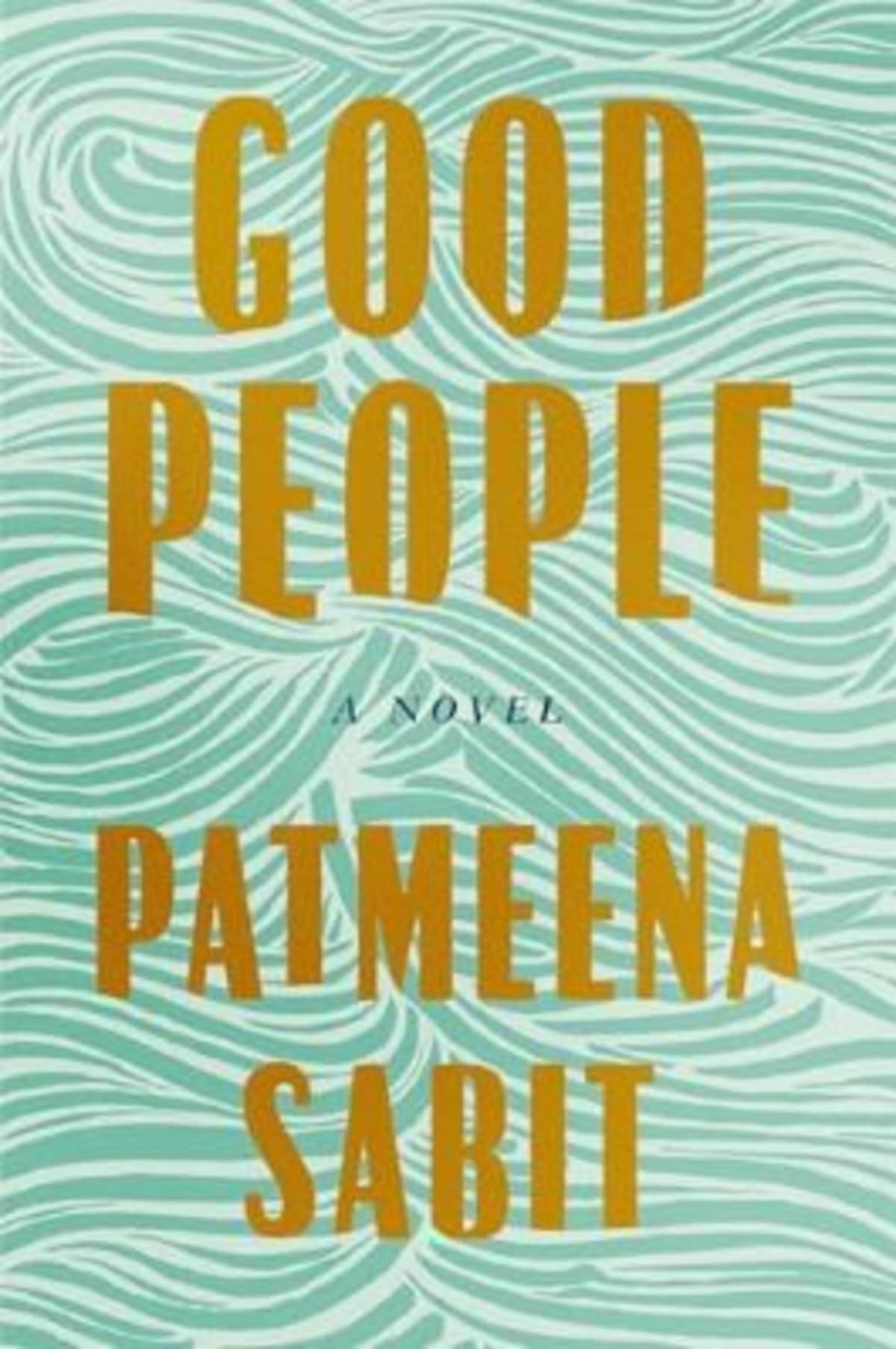
There are so many reasons to read Good People that a book review can’t do them justice. Patmeena Sabit’s unique narrative approach is critical to this exploration of a family tragedy aggravated by suspicions, xenophobia, and hearsay.
Instead of using a single narrator, the novel relies on family members, friends, acquaintances, witnesses, news reports, and public officials to tell the story of the Sharaf family. The father, who has immigrated to the US from Afghanistan, rises from a cleaner of rain gutters to a wealthy businessman. With his wife and four children, he occupies a mansion in an exclusive Northern Virginia neighborhood. The people who encounter them are just as vital to the story as the family itself.
The Sharafs personify the American dream until a mysterious event engulfs their oldest child Zorah. Rather than spoil the narrative for you, I’ll leave you to enjoy the book as much as I did by letting multiple voices lead you through it. Depending on who is speaking at any moment, Zorah is either the perfect daughter or a disgrace to her family and culture.
Sabit forces us to realize how prone we are to evaluate our fellow human beings through the lenses of cultural differences and behavior. We don’t know the Sharafs; we know only what other people say about them, and everybody has an opinion. It’s these contradictions that spin the event into an international controversy.
Don’t be discouraged by the disjointed series of anecdotes that introduce the story. The author knows what she’s doing. You’ll find yourself swiftly involved in what amounts to a detective story with multiple clues and interpretations of them. Opinions don’t always equal facts, and that’s why Good People is an important novel in this era of cruelty, stereotyping, and divisiveness.
I’ve limited my rating to four stars due to occasional instances of offensive language.
Chevron Ross's novels include Weapons of Remorse, The Seven-Day Resurrection, and The Samaritan's Patient. Click here for more information.