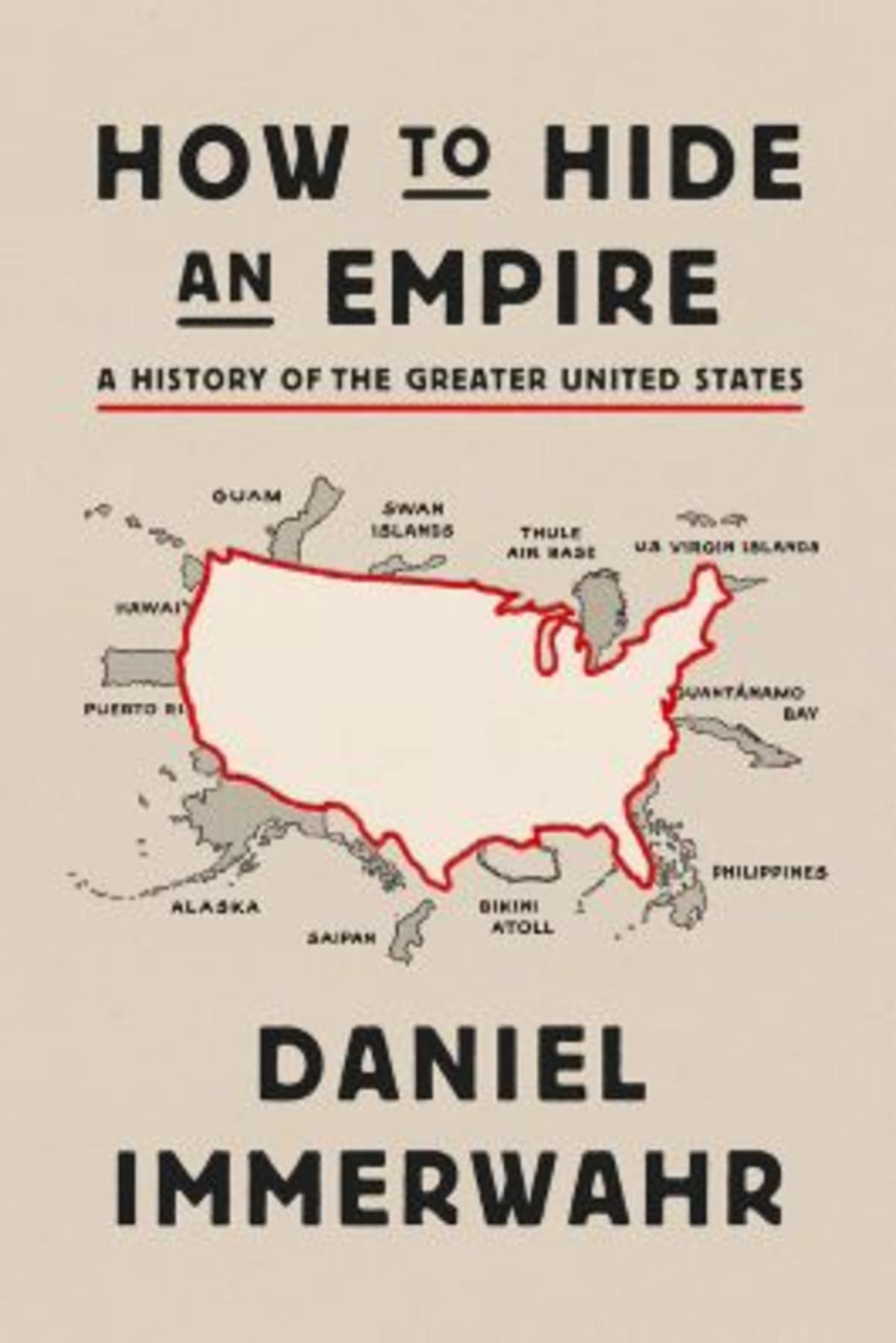
Did you know that George Washington considered Daniel Boone a bandit? That during World War II the Japanese occupied part of Alaska? Or that Hawaii lived under martial law for three years? Have you ever heard of the National Screw Thread Commission? All these facts are part of Daniel Immerwahr’s fascinating history of American colonialism.
In How to Hide an Empire, the author recounts the circumstances which led Europeans to conquer not only the land they own today, but many territories beyond the mainland. Immerwahr’s research tells how the US became interested in acquiring numerous islands because it desperately needed fertilizer for crops to feed its rapidly growing population. The abundance of bird guano on those islands was essential until scientists found ways to create synthetic fertilizer. Later, some islands became strategically important during wartime as military bases and bomb testing sites.
Much of the book focuses on the results of America’s growth into worldwide dominance during World War II and afterward. Things like fire hoses, nuts, bolts and screws had to be standardized among the Allied countries in order for the machines of war to function. Though other cultures seethed at the thought of adapting themselves to American ways, American influence prevailed, to the point that few countries today can thrive in the global marketplace without learning English.
Dark and shameful events accompanied colonization, and not just the treatment of Native Americans. Did you know, for example, that birth control pills resulted from American experiments on Puerto Rican women?
Sometimes the US government found itself better off without its territories. Such possessions as Cuba, Puerto Rico, Guam, and the Philippines, acquired in brutal wars of conquest, became troublesome when the natives began to demand independence. But in recent decades these small dots in the ocean have become useful, particularly following the 9/11 attacks—uses that bring no credit to America’s image as a Christian nation.
Immerwahr’s history, magnificently researched and well executed, adds a valuable perspective to American history. I have limited my rating to four stars due to several instances of offensive language.