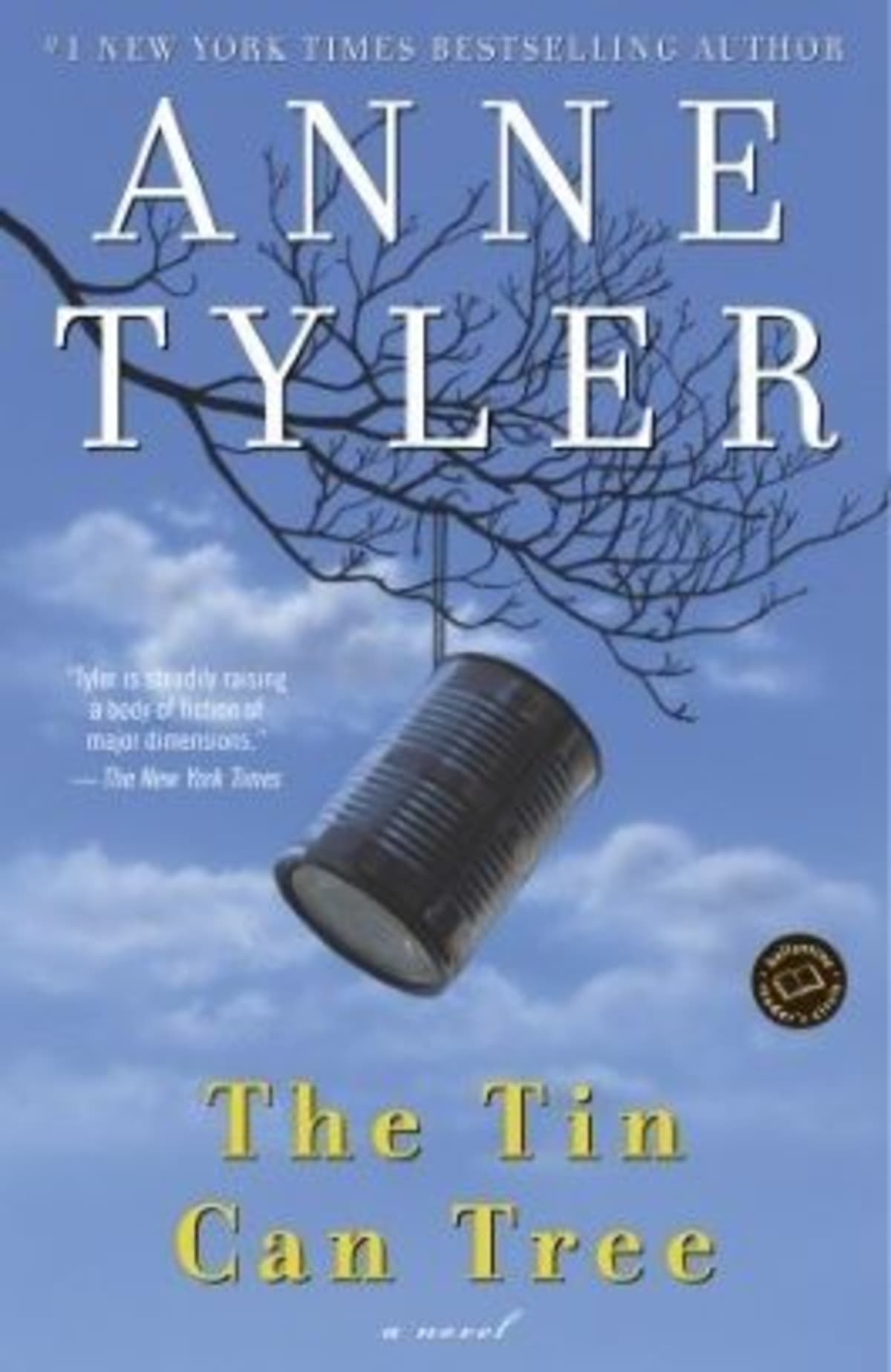
Published in 1965, The Tin Can Tree was Anne Tyler’s second novel. Though she was only 24, her unique insight into human beings shines brightly in this story of tattered relationships.
Three families, the Pikes, the Greens, and the Potters, share a house in North Carolina’s tobacco country. All are grieving over the accidental death of Janie Rose Pike, an exuberant, though bothersome, child. While her mother retreats into a catatonic state, the others try to help while dealing with their own problems. James Green, a small-town photographer, endangers his casual romance with Joan Pike because of his self-imposed duty to his hypochondriac brother Ansel. The Potter sisters, the third family, combat loneliness by baking cookies for everyone and begging for regular visits from the insurance man.
Joan works in the tobacco fields while keeping house for the Pikes and competing with Ansel for James’s attention. Self-centered and whiny, Ansel spends most of his time napping on the couch except for occasional disappearances that keep James on edge. Meanwhile, nine-year-old Simon Pike struggles to find his place in the world following Janie Rose’s death.
There are many poignant passages that capture the characters’ feelings, such as Joan’s: “She felt like a stick, very straight and alone, standing upright with nothing to lean against.” And sometimes we almost feel sorry for Ansel, whose monologues drive James crazy but betray his own conviction that his life is a perpetual limbo.
Like most of Tyler’s books, The Tin Can Tree minimizes plot. Her characters are its strength, lingering in our hearts beyond the final page. Now in her eighties, Anne Tyler remains a gift to American literature. If you haven’t yet discovered her books, choose one at random. You’ll be hooked, as I have been for many years.
Chevron Ross's novels include Weapons of Remorse, The Seven-Day Resurrection, and The Samaritan's Patient. Click here for more information.