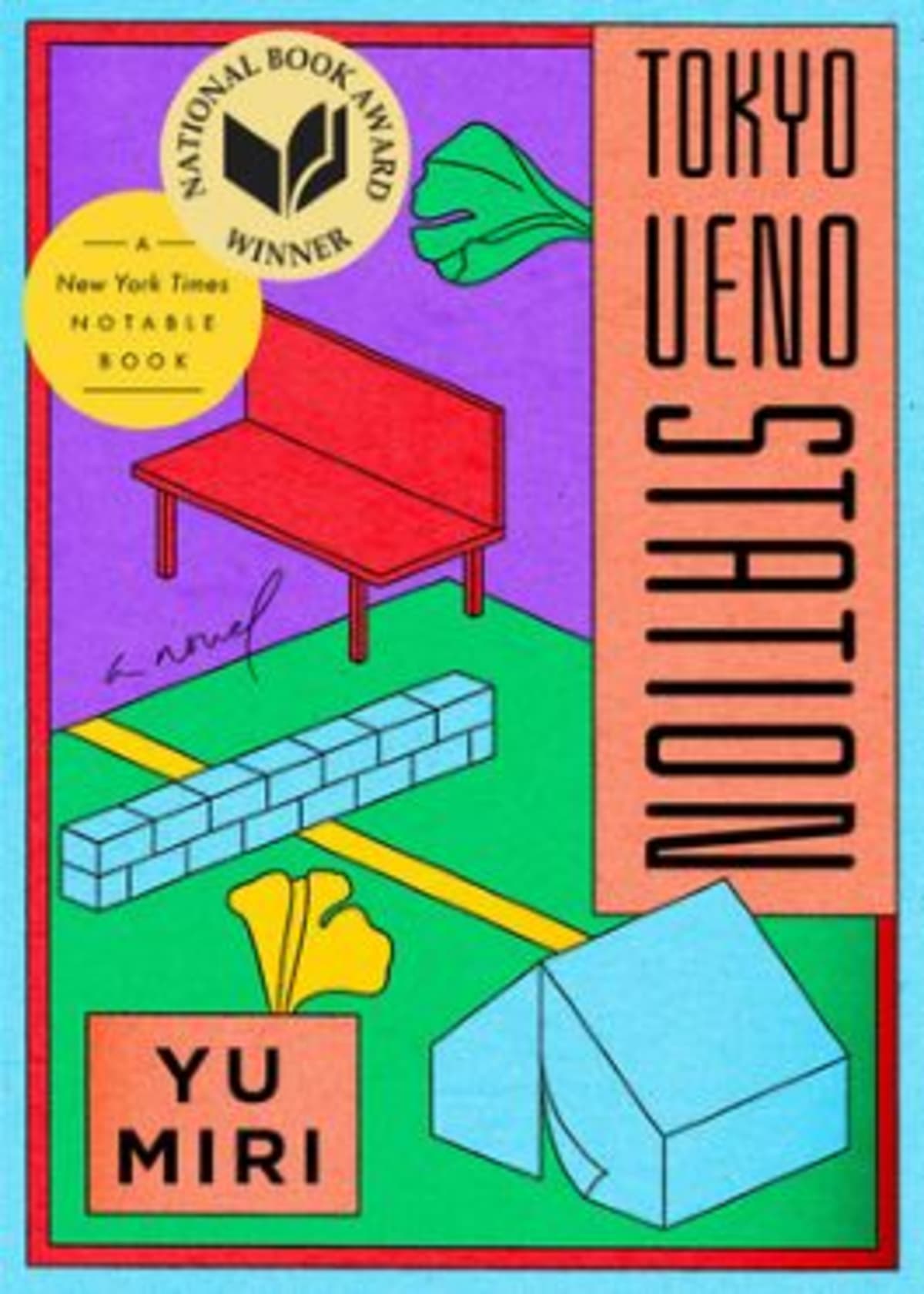
The “haves” in this world tend to treat the “have-nots” as invisible. Their mute desperation makes us uncomfortable, so we look through them. Kazu Mori, the narrator of Tokyo Ueno Station, is literally invisible. He is dead, his spirit seemingly fated to linger among the homeless people who come and go through the train station and memorial park where he met his end.
Kazu recounts a life of hardship and personal tragedy. Born in 1933, the same year as the Emperor, he took any sort of job he could get to support his family, most notably helping to construct facilities for the 1964 Olympics. Now, estranged from his survivors, he watches as authorities launch a campaign to clear homeless people out of the park in preparation for a visit by the royal family. Meanwhile, he eavesdrops on the conversations of people in transit and recounts Japanese history through the words of another homeless man who used to befriend him.
In this small, spare book of only 180 pages, the author manages to say a great deal in few words about poverty, loss and despair. Rather than whining about his condition, Kazu seems to be a mere observer of it. “I thought that once I was dead, I would be reunited with the dead,” he says. “I thought something would be resolved by death … But then I realized I was back in the park. I was not going anywhere, I had not understood anything, I was still stunned by the same numberless doubts, only I was now outside life looking in …”
I love the wistful tone of this book and the characters who come and go through Kazu’s world. Despite several instances of offensive language, author Yu Miri deserves acclaim for her poignant narration.
Chevron Ross's novels include Weapons of Remorse, The Seven-Day Resurrection, and The Samaritan's Patient. Click here for more information.